Showing posts with label Atkins Diet. Show all posts

What Vitamins Should be Taken While on the Atkins Diet?

Certain vitamins are essential to a healthy life. While on the Atkins Diet, many people remove foods from their diet in an attempt to reduce carbohydrate intake. In the end, they might end up removing valuable vitamins and minerals as well. The body needs certain support when shedding weight, and when combined with such a diet, supplementation is often necessary.

B-Complex Vitamins

  • B complex vitamins are especially important when on the Atkins Diet. It helps to control cholesterol, and is especially important during the first phase of the diet. This can also help in the event that you are feeling sluggish when first beginning the diet, as it can give your body a boost of energy to help you get through your day.
    Biotin is a B complex vitamin and is essential for the regulation of blood sugar, especially for diabetic Atkins dieters.

Fiber

  • Fiber is another vitamin that is all-important to Atkins dieters. The diet includes a great deal of protein, a lot of which can cause the digestive system to become backed up at first. After your body becomes more accustomed to the diet, digestion might become less of an issue. In the meantime, taking fiber or including plenty of flax or wheat bran into your diet can deliver a vital nutrient that prevents constipation.

Atkins Diet-Recommended Supplements

  • Many Atkins Diet starter kits contain vitamins to provide assistance and support the body's various systems along the way. The vitamins included with the kit provide everything that a person looking to lose weight on Atkins will need. B-complex vitamins are included, as well as fiber, chromium, selenium, vanadium and vitamins C and E. Talk to your doctor about your nutrition needs as they pertain to the Atkins Diet if you aren't sure which route is best for you.

Is the Atkins Diet Safe While Breastfeeding?

When you're a new nursing mother, two of the biggest concerns on your mind will be the safety of what you are ingesting and how to lose your extra baby weight. The Atkins diet, a high-protein, virtually carb-free eating plan, is a popular weight-loss regimen. It's often used as a quick way to lose pounds, so as a new mother, you may wonder if it's a good and safe plan to follow. There is evidence to suggest, though, that the Atkins diet is not the healthiest plan for breastfeeding mothers. 

What is the Atkins Diet?

  • The Atkins diet was formulated by Dr. Robert Atkins as a way to manage his own weight. His theory being that refined carbs ("white foods") are the reason so many Americans are obese. During the first two-week phase of the diet, called Induction, you will eat mostly protein, very little carbs forcing your body into a state called ketosis. In this state, your body will use fat stores as energy, but many view this as dangerous and potentially life-threatening.

Taking Care of Yourself

  • Per Jay Hoecker, M.D., a pediatrician at the Mayo Clinic, three of the most important things you can do while nursing is drinking plenty of fluids, getting enough rest, and eating a balanced, healthy diet. The Atkins diet is not balanced, eliminating almost entirely an important food group, so it's best not to follow it while nursing your infant. A diet rich in all healthy food groups will help you feel best and have the energy to nurse and take care of your baby.
  • Natural Weight Loss While Nursing

  • It's not just an old wives' tale -- you burn extra calories if you are breastfeeding your baby. Your body uses the stored energy in fat to make milk, thus helping you to to lose weight faster if you follow a sensible diet with moderate exercise, per the lactation experts at Baby Center.

Dehydration While on Atkins

  • According to David Levitsky, Cornell University professor of nutritional sciences, one of the dangers of the Atkins diet is dehydration. Once ketosis begins, you will lose glycogen in your liver. Since your body does not have enough glucose to control your blood sugar levels, it begins using glycogen instead. Glycogen contains many water molecules, and thus your body gets rid of a lot of water in the initial phases of a high-protein diet. Staying well hydrated is paramount to a healthy milk supply when breastfeeding, and the Atkins plan does not support that.

What to Eat While Breastfeeding

  • According to the Mayo Clinic, a healthy diet for breastfeeding mothers is full of fruits, vegetables and whole grains. These are the exact items that the Atkins diet asks you to eliminate. Be easy on yourself, listen to the old adage: nine month on, nine months off and give yourself time to lose your weight in a healthy manner.

How to Balance Fiber on the Atkins Diet

While on the Atkins Diet, fiber will be the dieter's best friend. The large amounts of iron that are consumed through the high meat levels in the diet can cause constipation quickly. Adding enough fiber to the diet will help to balance out the digestive system and help keep you regular. 

Things You'll Need


  • Fiber caplets
  • Fiber powder
  • High fiber foods

Tips For You


  1. Add fiber to your vitamins. Along with an iron-free daily vitamin, add fiber capsules. Fiber capsules are essentially a bulk forming laxative and should be taken with a large supply of water.
  2. Add fiber to your food. The market is full of taste free fiber powders. These powders allow those on the Atkins Diet to increase their fiber intake by adding fiber to every food they consume. When adding fiber, it is essential to start out with a low dose and slowly add more to the diet. Too much fiber at one time can cause gas and bloating.
  3. Add high fiber foods to your meal plan. There are a vast supply of high fiber foods that are lower in carbohydrates. Two of the easiest to add to the Atkins Diet are broccoli and high fiber tortillas. These two foods are very low in carbohydrates, yet offer an abundant natural source of fiber to the diet.
  4. Add water. All forms of fiber require a lot of water to work properly in the body. This means drinking water throughout the day and not just drinking water when consuming the fiber.


How to Use Protein Shakes to Jump Start Atkins

The Atkins diet was once thought to cause a huge list of heart problems and elevated cholesterol. Today, those myths are busted and more people are losing weight on low carb diets than ever before. If you don't like meat, you can jump start Atkins without ever tasting a single steak. 

Things You'll Need


  • Zero Carb Protein
  • Vegetable Oil

Tips For You


  1. Choose a zero carb protein powder. There are protein powders that contain carbs and those that do not. For the Atkins diet low carb jump start, you will need to find a zero carb protein. General Nutrition Centers, GNC, offers a great option that tastes great and mixes well.
  2. Measure the shake. You will need to figure out how much protein you need to consume each day. Excess protein will be converted to carbohydrates in the body and that is the last thing you want on Atkins or a low carb diet. Generally speaking, 0.4 grams of protein per pound is good.
  3. Add the fat. At the heart of a low carb weight loss diet is the fat. The body will use up all the carbohydrate stores and start burning fat for fuel. Adding two to four tablespoons of fat to each shake will jump start the low carb diet and shove the body into ketosis faster.


Can Someone Eat Sugar Free Candy on the Atkins Diet?

Because the Atkins diet restricts sweets, dieters often crave sugar. Eating sugar free candy is a great way to ease those cravings. However, not all sugar free candy is carbohydrate free. Many people assume that the Atkins diet consists of eating no carbohydrates for the duration of the diet, and that is not entirely true. The Atkins diet has four separate phases. Each phase lasts two weeks or more, and in each phase certain foods are unacceptable. Some carbohydrates are allowed in each phase of the diet.

Phase One
The first phase of the diet is called the Induction phase, and it only allows you to have 20 grams of carbohydrates per day. The first phase lasts two weeks or more, depending on how much weight you want to lose. Because of the small amount of allowable carbs, this phase usually consists of eating lean protein and green vegetables.

Green vegetables
Phases Two through Four
The second phase (On Going Weight Loss) allows you to add five more carbs to your diet per day. In the third phase (Pre-Maintenance) you'll add an additional 10 grams of carbs per day. And in the fourth phase (Maintenance), you'll slowly begin adding carbs back into your diet, restricting the number of carbs based on your metabolism. If you want to eat sugar free candy during the Atkins diet, then it's important to analyze the carbs per serving, and make sure you won't exceed the allowable grams of carbohydrates.
Sugar
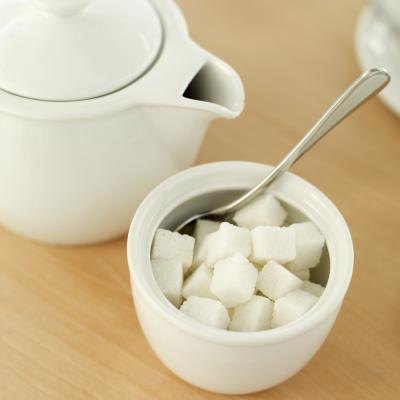
Sugar is filled with carbohydrates. To illustrate, there are five grams of carbohydrates in one teaspoon of sugar. Sugar free candy, on the other hand, is usually made with sugar substitutes. The Federal Drug Administration (FDA) sets the minimum amount of sugar a product can have to be labeled as "sugar free." However, this means that sugar free candy can still have a small amount of sugar and still be considered "sugar free." Even a tiny bit of sugar in candy can elevate the carb count.

Sugar
Sugar Alcohol
On some sugar free candies, you may see the words maltitol, sorbitol, isomalt, or xylitol. These are not sugars, but they are substances called sugar alcohol. Sugar alcohol is technically neither sugar nor alcohol. They are substances that are formed from the refinement of sugar. Sugar alcohols are also naturally present in some plants and herbs. Even though they taste like sugar, the body doesn't absorb sugar alcohols like regular sugar. In addition, they have little or no calories. Therefore, many sugar free candies contain sugar alcohols. Most sugar free chewing gums are sweetened with sugar alcohols. It's important to know, however, that sugar alcohols do contain carbohydrates.

Most sugar free chewing gums are sweetened with sugar alcohols.
Solutions
If you're craving sweets on the Atkins diet, check the labels of sugar free candy before you eat it. Some sugar free candy does have a minimum amount of carbs, and will therefore, fit in your diet. You can also eat sugar free Jello, which usually has no more than one and a half grams of carbs per serving. Top your Jello off with a dollop of cool whip, which only has three grams of carbs per serving, and you should be able to satisfy your sugar cravings.

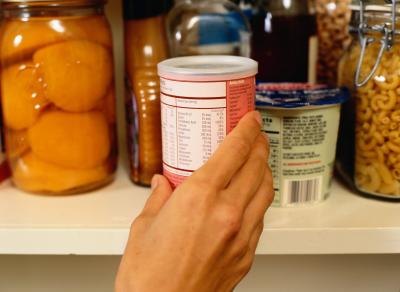
Check the labels of sugar free candy before you eat it.

Type of Nuts to Eat on Atkins Diet

Based on the book "Dr. Atkins' Diet Revolution," published in 1972 by Dr. Robert Atkins, the Atkins Diet restricts intake of certain foods to trigger weight loss. By Dr. Atkins' own admission, the diet is a drastic measure for obese people. The fact that the early part of the diet is limited in vegetable intake and focused on meats and cheese has made it the target of critics, but the positive results of the diet seem to speak for themselves. Nuts are one of the healthy foods that are not allowed early in the Atkins Diet, but which are gradually phased back in as the diet progresses.

Nuts and Nutrition
The term "nut" is a bit ambiguous because in common usage it includes some specimens, like pistachios, that are not nuts in the biological sense. Technically, a nut is a type of fruit with a single seed. At maturity, the ovary wall hardens, becoming a shell and the seed inside remains soft and edible. Many seeds, like almonds, cashews, macadamia nuts and brazil nuts, are nuts only in a culinary sense. Peanuts are actually legumes. Nuts are nutritionally significant because they contain essential fatty acids. They also contain significant levels of protein and carbohydrates.


Induction
During the induction phase of the Atkins Diet, the most strict period, no nuts are permitted. The purpose of the induction phase is to get the body accustomed to burning fat by starving it of other energy sources. Eggs, meat and cheese are staples of the induction phase. Small amounts of vegetables can be consumed because most of their carbohydrate content is indigestible fiber. Nuts are too rich in digestible carbohydrates to be recommended during the induction phase.


Phase 2
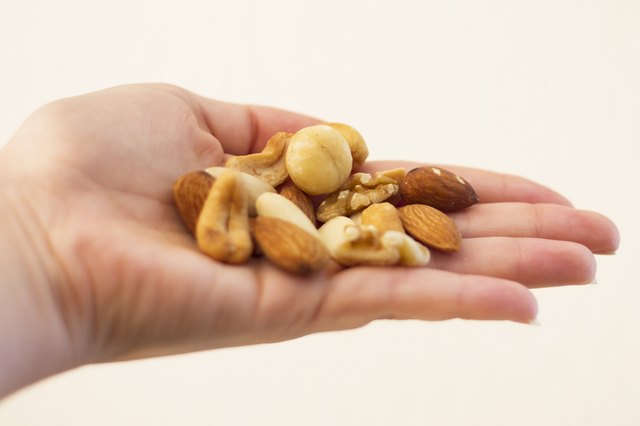
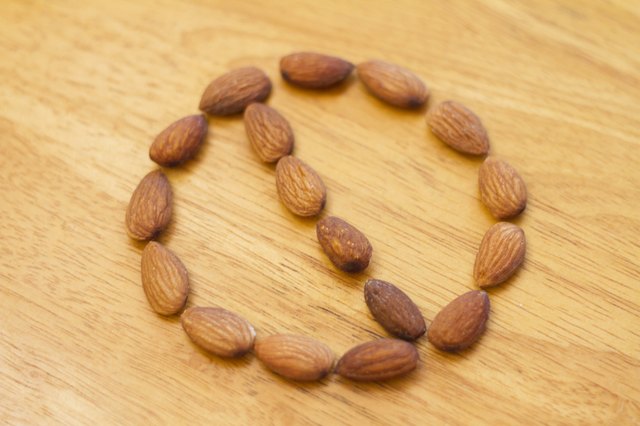
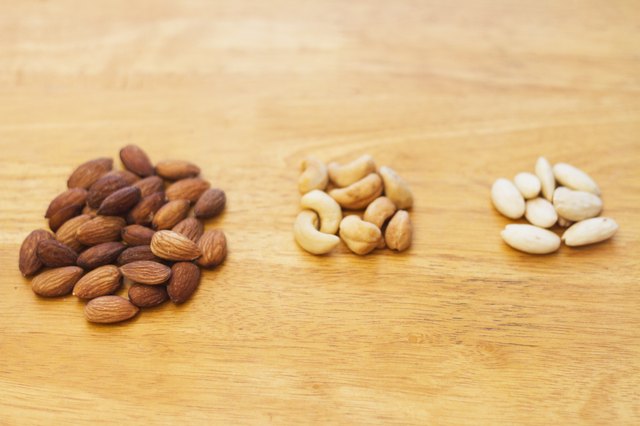
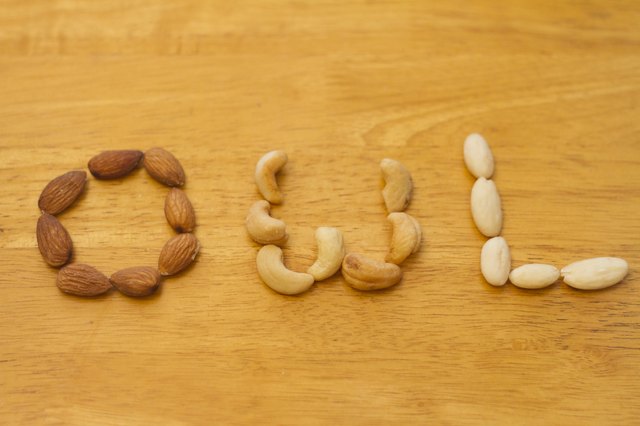
The ongoing weight loss (OWL) phase of the diet allows additional carbohydrates according to a rule called the Power of Five. Certain foods are allowed in portions that have five or less net carbs, calculated by subtracting dietary fiber from total carbohydrates. Servings of nuts with five net carbs or less are 30 almonds, 10 Brazil nuts, nine cashews, 12 macadamia nuts, 10 pecan halves, 50 pistachios or 14 walnuts.


Pre-Maintenance
As you reach your target weight, you move from the OWL phase into pre-maintenance. The scope of acceptable foods increases, but portions are carefully controlled to limit total carbohydrate intake. Consumption is now governed by the Power of 10. Add 10 grams of carbohydrate to your daily intake, and add another 10 each week until your weight loss stops. The plan calls for the same portions and types of nuts allowed in phase 2 with the addition of certain legumes, fruits and vegetables to provide these additional grams of carbohydrates.

Maintenance
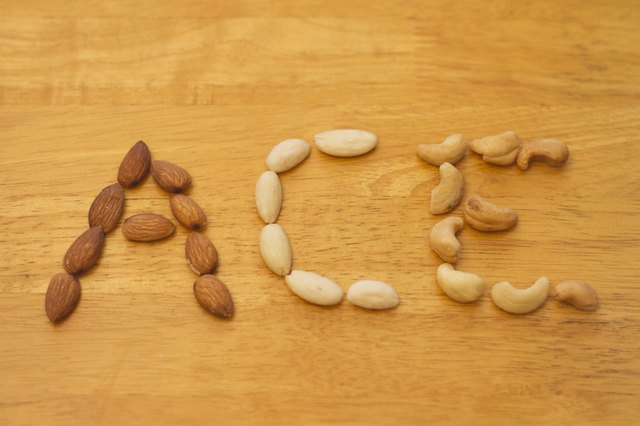
Once you reach your target weight, you transition to the maintenance phase of the Atkins diet. No food is strictly off limits in this phase. The goal, however, is to remain within the the range of carbs you were consuming at the end of the pre-maintenance phase. This is what Atkins calls the Atkins Carb Equilibrium, or ACE. A carb counter is provided to ensure that total carb intake, including from nuts, stays at the equilibrium level.


How to Create an Atkins Diet Menu Plan

Atkins is a reduced carbohydrate diet that can help with reducing and successfully maintaining a healthy weight. It's a lifestyle change, so menu planning is essential to help you create meals within the range of allowable carbohydrates. It's important to your success to create a menu plan specific to your stage in the Atkins plan.

Things You'll Need


  • Atkins diet book
  • Atkins-friendly recipes and food lists

Tips For You


  1. Determine your total carbohydrate range. Atkins has different phases of the diet so if you are unsure of your allowable carbohydrate amount, consult your Atkins book or the Atkins website for help.
  2. Research lower and good carbohydrate foods and recipes. You want a range of food so you don't tire of your food options and to ensure you're getting a healthy balance of protein, carbohydrates, fiber and fats.
  3. Compile a list of foods and recipes that fits your preferences and calculate the total carbohydrates per servings using the Atkins calculation which is typically carbohydrate grams minus fiber grams. Refer to your Atkins book if you need further assistance in calculating total carbohydrate amounts.
  4. Write your total carbohydrate amount on the top of a sheet of paper. Below that number, begin to write in the different foods you plan eat at each meal with the total carbohydrate amount. Conversely you can use sites such as Recipezaar.com to help compile recipes and create menu plans that calculate daily nutrition values for you.
  5. Calculate the carbohydrate amount per day and ensure you are sticking to your plan. If you are over, determine how you can reduce your carbohydrates. You might be able to reduce portion sizes, swap ingredients in a recipe for more Atkins-friendly alternatives or even reduce beverages that have carbohydrates and replace it by drinking water.
  6. Ensure you are getting enough to eat everyday by planning three meals and two snacks per day. Remember to also include low carbohydrate vegetables in your plan and take a multi-vitamin.


Atkins Soup Diets

The Atkins diet works by limiting carbohydrate intake, causing the body to enter ketosis and burn fat for energy. Though the diet is lenient in some respects --- bacon and eggs is a perfectly acceptable, low-carb meal while on Atkins --- foods that are even moderately high in carbs are strictly off limits. Unfortunately, this includes lots of soups. Thickening agents, starchy vegetables and pasta are common culprits behind high carbohydrate counts in soups. Keep this in mind when planning soup recipes and you will not only be able to enjoy a bowl of guilt-free soup while on Atkins; you can even make soup the feature meal of your diet and still watch the pounds melt away.

Vegetable Soups

  • Pasta fagioli and Alphabet soup are among the most common vegetable soups, but beware: the pasta, carrots, corn and vegetables they contain make them very high in carbohydrates. For low-carb, Atkins-friendly alternatives, try creamed asparagus soup or creamy garlic zucchini and pea soup. The Atkins website provides recipes for these and other low-carb soups to members -- memberships are free.

Beef Soups

  • Low-carb beef soups are versatile enough to be a staple in an Atkins diet. Sauté 1 lb. ground beef and add 4 cups beef stock, 1 tsp. minced garlic, ½ cup chopped fresh cherry tomatoes, 3 chopped celery stalks, 1 diced zucchini and salt, pepper and oregano to taste for a basic, but tasty, vegetable beef soup. Experiment with low-carb additions such as mushrooms, tofu or cheddar cheese, or form ground beef into meatballs or use strips of sirloin instead for variety.

Chicken Soups

  • Chicken noodle soup is an American classic, but unless you make it using low-carb pasta, it is, sadly, an Atkins no-no. But fear not, there are lots of low-carb chicken soup recipes that are just as comforting and tasty. Enjoy the Southwestern flavors of chicken tortilla soup --- just ask for it without the tortilla strips for an Atkins-friendly alternative. If you're in the mood for Asian cuisine, try the chicken, shiitake and bok choy soup recipe featured on the official Atkins website.

Pork Soups

  • Ham and split pea is a popular soup that is Atkins-friendly if homemade; beware of canned soups, as they usually contain "hidden" carbs. While bacon is high in fat, it is naturally low in carbohydrates, and just a few strips adds tremendous flavor to soups. Cheddar bacon and blue cheese and bacon are two low-carb soup varieties that pack big, bold flavor into an Atkins-friendly meal that is filling enough for lunch or dinner. For a smoky twist on a classic soup flavor, fry and cut up 1/2 lb. of bacon, and add to a low-carb vegetable soup.

Lunch Meat on the Atkins Diet

You might assume you can have all the meat you want while sticking to Atkin’s strict guidelines. That isn’t the case, though. Lunch meats tend to have small amounts of carbs, which generally come from the outer casing added during processing. You can still have lunch meats, but read the nutrition facts label carefully, figure out how many grams of carbs per portion there are and weigh your serving ahead of time.

Daily Carb Count

  • Atkins requires you to cut a big chunk of carbohydrates from your diet. In the beginning phase, known as “Induction,” you can’t have more than 20 net carbs per day -- that’s the amount of carbs you get after subtracting fiber grams. You should be getting 225 to 325 grams of carbs per day, which follows the 45 to 65 percent of calories from carbs recommended in the Dietary Guidelines for Americans 2010. But the 20 grams of carbs limit on Atkins meets less than 9 percent of your recommendation, making it essential to keep track of all of the carbs you consume.

Carbohydrates in Lunch Meat

  • The exact number of carbohydrates in your favorite lunch meat varies slightly, depending on the brand and what it’s made with. In general, sliced deli meats contain between 0.8 and 1.3 grams of carbohydrates in an ounce of meat. This includes lunch meats like ham, chicken, turkey and bologna. Because those grams of carbs can add up quickly if you pile several slices between a couple leaves of lettuce for lunch, weighing your portion before you eat is imperative to calculate your carb intake.

Sodium Consideration

  • The main concern with a large intake of lunch meats on the Atkins diet is with the high sodium content. Lots of sodium in your diet could increase your blood pressure and eventually lead to heart disease. You shouldn’t have more than 2,300 milligrams of sodium each day if you’re in general good health, according to the Dietary Guidelines for Americans 2010. Some deli meats have as much as 300 milligrams in each ounce, taking up 13 percent of the sodium you can have for the day. Select lunch meats that are labeled as “low sodium” whenever possible, to keep you sodium intake down.

No-Carb Alternatives

  • Rather than filling up on processed meats, get in the habit of cooking meats at home. Natural, unprocessed meat doesn’t contain any carbohydrates. Once or twice a week grill a few chicken breasts, roast a round of beef or braise a pork tenderloin. You’ll be able to stock up your refrigerator with plenty of carb-free meats that are naturally very low in sodium.

Introduction to the Atkins Diet Plan

The Atkins Diet is a popular weight-loss method that involves eating protein and fat while excluding all bad carbohydrates and severely limiting good carbs. Of the Atkins Diet's four stages, the beginning "induction" is the most severely limiting but usually produces the fastest results.

Quick Start

  • There are two reasons for using the first stage of the Atkins Diet to get started. The first is simply to see the fastest and most productive results. This is especially valuable for individuals with a lot of weight to lose. The second reason for the extremely concentrated first stage of the diet is to throw the body into ketosis. This switch makes the body burn stored fat for fuel. Under normal modern conditions, people eat large quantities of carbohydrates that the body uses as fuel. By eliminating most of those carbs the body is forced to consume the stored fat.

Calories

  • Unlike most diets, calories play a much less significant role in the Atkins Diet. More important than limiting calories is making sure you eat enough calories to avoid making the body go into starvation mode. People often fear calories after a lifetime of being told to limit them. When starting a diet where meats are unlimited, people often are wary of the number of calories and try to limit them. Doing can cause a dieter to fall below the normal level of calories required by the body on a daily basis to perform normal functions. In that case, the body assumes it is starving and stops all fat consumption, thereby halting weight loss.
  • Permitted Foods

  • In the induction stage, dieters are allowed unlimited amounts of any meats including fish, poultry, beef and pork, along with eggs. Fats are unlimited as long as there is no sugar included in the ingredients. Dairy products often combine fat and carbohydrates, so they are severely limited. In the introduction phase of the Atkins Diet each dieter must eat 12 to 15 grams of carbohydrates per day but they are strictly limited to the acceptable carbohydrate group consisting of green vegetables, cheese, as well as oil and nuts. As dieters progress to the next levels, carbohydrates are gradually reintroduced. It is not true that the Atkins Diet completely eliminates carbohydrates from the diet in any stage, and the diet only severely limits them during the initial first few weeks.

Atkins Phases

  • The first phase of the Atkins Diet, or induction phase, lasts for two weeks. Dieters then move on to the "ongoing weight loss" phase, or OWL. This second phase continues until dieters reach the last 10 pounds of their desired weight loss. At that point they switch to the "premaintenance" phase, and finally "lifetime maintenance."

Exercise and Water

  • One area where the Atkins Diet is similar to all diets is that exercise and strict consumption of at least eight glasses of water per day are essential elements.

How to Switch From Atkins to Weight Watchers

The battle to manage your weight through dieting trends, including Atkins and Weight Watchers, requires careful planning, as your body reacts to dramatic changes in your food intake through weight fluctuation. The Atkins diet, designed by Dr. Robert C. Atkins, focuses on low-carbohydrate and high-fat consumption, while the Weight Watchers plan follows a high-fiber, low-fat diet that regulates calorie consumption. When transitioning between these two extremes you may temporarily feel sluggish as your body acclimates to the new diet. As with any diet, you should talk to your doctor to determine the safety prior to adhering to the new diet guidelines.

Tips For You


  1. Slowly integrate more complex carbohydrates into your meals. Whereas the Atkins diet limits your daily intake of carbohydrates, complex carbohydrates found in whole-grain breads and vegetables are the focus of Weight Watchers due to the amount of fiber in complex carbohydrates. Fiber-rich foods provide satiety and decrease the need to continuously snack throughout the day.
  2. Choose low-fat meats. Lean meats are low in saturated fat and total fat, which prevents weight gain while providing protein and other healthy nutrients. Lean meats include beef and pork tenderloin, skinless chicken and fish.
  3. Join the Weight Watchers group. Online or face-to-face meetings provide encouragement and helpful advice from others who are also striving to lose or maintain their weight. The online program provides recipes and food choices that allows you to stay within the allocated points that are used to control weight. Known as PointsPlus, the online program includes a food journal to track your progress and, according to the official Weight Watchers site, it is accessible from any computer or mobile device that supports web browsing .
  4. Stay within your points. Food is categorized by points, which makes it easier to choose healthy food options rather than blindly make food decisions.


Atkins Diet And High Blood Pressure

The Atkins Diet is one of the oldest and most popular low-carb solutions. Developed in the 1970s, the Atkins Diet has stood the test of time, helping thousands upon thousands of people combat weight-control issues through carbohydrate restriction. But what about the effect of the Atkins Diet on high blood pressure? For those wondering if the Atkins Diet is the right solution to combat your blood pressure problems, wonder no more.

About the Atkins Diet

  • The Atkins Diet is a fully-fledged low-carb dieting solution. Unlike other diets that only restrict certain types of carbs, Atkins mandates that dieters on its program ingest no more than 20 grams of carbs per day for the first few weeks. This makes Atkins a ketogenic diet, whereby the body begins to use fat instead of glucose for fuel.

How Atkins Combats High Blood Pressure

  • Blood pressure is a measurement commonly used to assess health by determining how hard the heart is working to pump blood throughout your body. The less strain placed on the heart at any time, the better. Atkins, and other low-carb programs, facilitate rapid improvement in high blood pressure by triggering fast and sustainable weight loss. As body weight decreases, the heart is placed under far less strain to supply blood throughout, decreasing blood pressure.
  • Medical Research

  • A 1999 study by Heilbronn, Noakes, and Clifton demonstrated that 12 weeks on a high-protein diet like Atkins caused a reduction in insulin levels, blood sugar and blood pressure. This buttresses the assertions of Dr. Robert C. Atkins, who initially marketed his diet as one that would positively affect a dieter's blood pressure.
  • How Does It Work?

  • Beyond just weight loss causing a decrease in resting blood pressure, low-carb diets can also keep blood pressure in check by controlling insulin levels. Elevated insulin levels, as triggered by eating high-carbohydrate meals, have been shown to relate to increases in blood pressure. By keeping blood sugar and insulin in check, Atkins has the residuary effect of keeping blood pressure under control as well.

Considerations

  • While Atkins can help you to control your high blood pressure, remember that the positive changes brought about by low-carb eating will revert upon abandonment of the plan. Understand that low-carb eating is a lifestyle, and that you cannot use Atkins as a band-aid to mitigate otherwise unhealthy habits. But when Atkins is used in a sensible and continuous plan for long-term health, it can certainly make blood pressure issues a thing of the past.

How to Combat Constipation on Atkins

Many people complain of constipation when they begin the Atkins diet. This constipation often results from two causes. First, you're eliminating many possible sources of fiber from your diet, such as fruits, legumes and all kinds of grain, including whole grains. Second, a low-carb diet often begins with several pounds of water loss. If you don't drink plenty of water on this diet, and you're eating a lot less fiber, constipation can result. Atkins recommends several ways to combat this constipation, but if constipation is persistent or severe, consult your doctor.

Things You'll Need


  • Fiber Supplements
  • High Fiber Vegetables
  • Avocados

Tips For You


  1. Eat all the vegetables that the Atkins diet allows. Induction, the most carbohydrate-restricted phase of the diet, allows several cups of vegetables a day. If you eat all your veggies, you're much less likely to be constipated.
  2. Drink all the water that the diet recommends. Atkins recommends at least eight 8-ounce glasses of water daily. Staying hydrated increases your chances of avoiding constipation.
  3. Consider a sugar-free natural laxative, such as psyllium or ground flax seed husks, and follow the instructions on the label. If constipation persists, consult a doctor.


How to Complete Phase One: Induction of the Atkins Diet


The Atkins Diet is a very specific way of eating that can result in substantial weight loss. The diet can take time to get used to, however. The induction phase of the Atkins Diet is designed to get the body used to the new diet and to get it ready for weight loss.

Tips For You


  1. Identify low-carbohydrate foods that you enjoy eating. The induction phase of the Atkins Diet allows very few carbs, making a wide variety of low-carb foods a must. By choosing foods you like, you will be more likely to stick with the diet. But, those foods must be from a list of foods approved for phase one of the diet. The exact foods that are allowed are available on the Atkins website as well as the book Atkins Diet Revolution. Most of the foods are high-protein foods such as meats and seafood.
  2. Start counting the number of carbs you eat each day. You are allowed 20 grams per day. Use a food diary or a spreadsheet to keep track of each and every carb you consume.
  3. Stay on the diet for two weeks. The 14-day period of induction is long enough for most people to get the body to burn fat for energy instead of the carbs it burned before you began the diet. Dieters are allowed to stay in phase one longer if they wish to continue the rapid weight loss of this phase.
  4. Give the diet a chance. It can take a few days before the body is used to the new diet, during which you may feel fatigue and hunger. However, after a few days many people report having more energy and being hungry less often than before the diet.


Food to Avoid on the Atkins Diet

Many people have experienced frustration with low carbohydrate diets, such as the Atkins plan, while others have had great success. Understanding what is OK to eat and what is not OK to eat is essential to making Atkins work for you. It also helps to understand the effects that different types of foods have on your body and your metabolism.

Atkins Explained

  • The basic premise behind the Atkins plan, especially in phase 1 (induction) and phase 2 (ongoing weight loss), is to get your body used to burning fat instead of carbs as energy. Carbohydrates hit our bloodstream and change into a sugar called glucose, which then causes insulin levels to spike. When you have extra carbohydrates in your system and insulin is released, a process occurs that turns the carbs to fat. You can reduce the impact of blood sugar fluctuations by reducing carbohydrate rich foods. When your body does not have carbs to use as energy, it uses fat.

Carbohydrates

  • High carb foods such as refined flour, oats, breads, pasta, grains, milk and potatoes are not allowed in phase 1 or 2. Refined carbohydrates, like white flour and white rice are strongly discouraged even during phase 4, maintenance. The Atkins plan encourages eating foods that provide the most nutrition with the least amount of net carbs. Total carbs are reduced by the amount of fiber in fresh vegetables, such as lettuce, broccoli, cabbage and spaghetti squash. Fruits can be added slowly after induction is complete.
  • Sugars

  • During induction, you are limited to 20 carbs per day, so sugar and other sweeteners such as high fructose corn syrup, fructose, dextrose and others are not allowed. Sugary snacks like cookies, candy, ice cream, and cake are not allowed. Many foods have hidden sugar, so it is important to read and understand the label. Sugar also causes insulin to spike. Some "sugar free" foods and drinks contain sugar alcohols called malitol and sorbitol that affect blood sugar levels and lead to bloating and gas for many individuals. They should be strictly limited while on Atkins.

Beverages

  • Alcohol and caffeine affect insulin and blood sugar levels. Alcohol is turned into energy and, if your body does not use that energy, it turns into fat. While you can have a drink every now and then during later phases, it is not allowed during induction. Caffeine can affect blood sugar levels on a more minimal basis. The main reason to avoid caffeine is that it causes water retention. It is recommended to eliminate caffeine while on Atkins. If you experience headaches and withdrawal, one small caffeinated drink per day is okay.

Fats

  • The last and most misunderstood category of food that Atkins limits is "bad fats". Many folks take a cursory look at Atkins and think they can eat a lot of fat because their body will use it as fuel. Saturated and trans fats can increase the risk of heart disease and cholesterol and lead to other serious health problems. Chemically altered trans fats are present in processed foods such as margarine, baking mixes, chips, cookies, frozen dinners and fast food. These foods are not allowed on Atkins anyways. Healthy fats, coming from foods like olive and coconut oil, and those from fresh meats are integral to success on Atkins.