Showing posts with label Muscle. Show all posts

The Diet for Optimal Muscle Gain

A lot of people think that the hardest part about gaining muscle is what happens in the weight room. I would personally disagree with these people. Eating right is where it really gets tricky. Knowing when and what to eat is a big challenge. In this article I will tell you the basic guidelines to the right diet.

So, if you're trying to gain muscle and increase your strength, there is three things that you will need: protein, carbs, and fats. Let's start out by talking about the obvious one, protein.

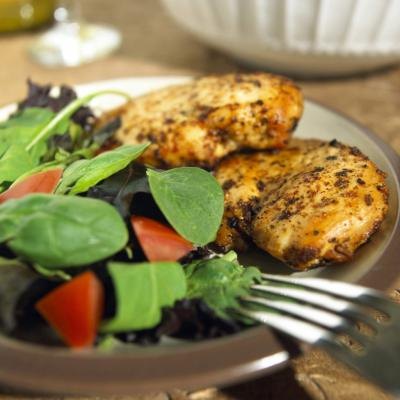
Everyone knows that you need protein in order to put on some muscle. So, what are the best foods to get this nutrient from? Well, the easiest way to get protein into your diet is by drinking whey protein. Drink these protein shakes within 30 minutes after your workout in order to get the most out of them. There is also many foods and drinks that you should eat during the day to get more protein. The number one thing I would recommend is drinking milk. Lots and lots and lots of it. It is a great source of protein and calcium, and with relatively low amount of fat. Another great food is chicken. Try and eat grilled chicken, not fried of course. Some other good sources of protein are fish, eggs, beans, and nuts. I also love peanut butter, which has a good amount of protein, but watch out for the fat in it.

Now, when should you be getting your protein in? Well, in the morning you should try and get some fast acting protein, such as eggs, or you could drink some whey protein. Throughout the day try and have some chicken, nuts, etc. Eat in 3 hour intervals. This is proven to be the best amount of time in between meals in order to get the most out of your foods. Before you go to bed, have some slow releasing protein. You can do this by having dairy such as milk or cottage cheese.

Next is carbs. Carbs are very important for fueling your workouts. Try and eat a lot of pasta, breads, potatoes, and other starchy foods. You want to try and get your carbs in right after you wake up and around 5-6 at night. Also, before your workout, try getting some quick acting carbs by having some fruit. You may not think it, but you will notice a big difference in energy throughout your workout if you just have some fruit before you begin.

Finally, let's look at why fats are important. Believe it or not, the right amount of fat in your diet is good for you. Fat helps your body absorb nutrients and minerals. Also, fat helps you increase testosterone. Now, don't go out and get some McDonald's. Try getting your fat from things such as olive oil, or nuts.

Muscle Building Workouts

Muscles Building Workouts Muscle building workouts don't require expensive gym memberships or personal trainers. They do require a basic understanding of how to work out in order to build muscle tissue. Once you know the exercises, it is important to be consistent with them.
A good, over-all total muscle building workout should only take about 20 minutes, and be done 3-4 times each week. Allow a day in-between workouts for the muscles to rest and repair. Muscle building workouts are usually accomplished using weights, resistance bands or your own body weight.
Muscle is built as you repeat short, quick movements over and over. As muscles are consistently challenged, they build on themselves and increase in size. Walk with weights: The easiest method to begin muscle building is by combining hand weights on a walk. 3 or 5 pound weights work well for this. Your arms will become strengthened and toned as you walk simply by carrying a pair of weights on your morning walk.
Lunges: With one foot forward, one behind, gently hold 3 or 5 pound weights. Ease down slowly till the knee barely touches the ground and slowly rise back up. Repeat this movement 5 times. Switch foot positions and work the other side 6 times total. Repeat this pattern twice. Lunges strengthen the thigh muscles.
Squats: Separate feet shoulder width apart. Hold weights gently. Slowly squat down 6 times. Rest a moment, and then repeat. Squats work the thigh muscles. Arm Lifts: Hold weights gently, either 3 or 5 pounds. Lift arms slowly until parallel to the floor, and then stop. Slowly lower arms until at your sides again. Repeat 5 times. Sit ups: Lay on the floor, facing the ceiling. Lock arms behind head bend knees with your feet on the floor. Make a small lift motion in your upper body, without straining your neck until you feel it in the stomach. Repeat 11 times.
Push Ups: Lay face down on the floor. Place hands under shoulders, bend your knees. Slowly rise up to arm's length. Repeat 11 times. Leg Lifts: With the back of a chair in front of you to hold on to, separate feet shoulder width apart. Bend one knee and lift the foot, behind you. Now, lift your knee and foot behind until your leg is almost straight. Do this slowly, let it down and repeat 5 times. Switch to the other foot and repeat.
A consistent muscle building workout should show results in about 6 weeks.

How To Build Muscle

Do you wish your body was rock hard, or maybe just toned and healthy? If so what you really need is to build muscle to improve your physique. The good news is that anyone can build muscle if they are willing to develop a routine and work hard to achieve the goal.
  1. Start with a healthy diet. When you want to build muscle you need to keep your body healthy enough to work hard. Consume plenty of fruits, vegetables and lean protein. This healthy diet is not about weight, it's about fuel. Your body needs proper fuel to run efficiently and building muscle is easier when your body is efficient.
  2. Create a plan that works all muscle groups. You cannot spot train to build muscle, at least not effectively unless you are a dedicated body builder with several hours to train each day. If your goal is to build healthy muscle, you need to work your entire body. In creating your workout plan you can head to a personal trainer for a plan tailored to your body and needs or you can begin with the traditional body weight exercises such as squats, lunges and calf raises for your lower body; crunches, reverse crunches and the plank for the abdominals; and push ups, pull ups and dips for the upper body.
  3. Start small, then increase weights. There are articles all over the web that tell you to weight train for endurance with light weights and tons of repetitions. Ignore this advice if you want to build muscle. When adding weight bearing exercise to your routine start the first workout with single sets of eight to twelve repetitions and the heaviest dumbbell weight you can lift while still getting in the full set. If you are new to strength training this may be as little as three to five pounds but don't worry, you will build up to heavier weights in no time.
  4. Increase your weight training until you can complete three sets of each exercise. Three is the easiest number to remember when building muscle. You want to work out three days per week and build up to three sets of each exercise. Increase the weight once you can complete twelve (a multiple of three) without straining.
  5. Alternate your exercise routine every two to three months. Your muscles will adjust to the routine quickly so change things often. Work the same muscles but use different moves. For example if working the biceps you can start with basic curls then when you adjust the routine change to hammer curls or work up to chin ups. These all work the same muscles but changing the position of the hands and the movement keep muscles from adapting to the work.
  6. Don't forget to stretch. No strength training workout is complete without stretching. You stretch at the end of the workout because this is when the muscle is the warmest and most pliable. Stretching the muscles you've worked makes you more flexible and helps the muscles repair themselves.
Building muscle requires regular weight or resistance training with increasing amounts of weight. Within three to four weeks you will begin to see toning especially in your biceps and triceps.  Later you will see more tone and definition in the larger muscles.

How To Increase Muscle Tone

No matter how much you want to lose weight, you also want to look good. Just losing fat isn’t enough to get your body in shape. You need to increase muscle tone as well. The good news is that muscle wants to work -- it wants to be toned. Follow these steps and you'll be well on your way to increasing muscle tone all over your body.

Step 1

Commit to weight training. In order to build muscle tone, you need to start getting strong. I’m not talking big and bulky muscles but lean, toned ones. Commit to strength training using your own body weight as well as free weights at least twice a week in order to increase your muscle tone.

Step 2

Work your entire body. One of the simplest mistakes when toning is to focus on problem areas. Spot toning is rarely effective especially if you are also trying to lose fat and gain muscle at the same time. You need to work the entire body to build muscle and to create a balanced physique.

Step 3

Don’t forget the smaller muscles. It’s easy to plan a weight training program that focuses on the muscles people want to tone most – your biceps, abs, glutes and quads. It’s important to also increase the tone of your supporting muscles in your triceps, back, shoulders, hamstrings and calves.
When working with your upper body, you may start with lighter weights for the smaller muscles in your shoulders and arms, but you should focus on building and toning what you have.

Step 4

Challenge your routine with heavier weights. Muscles easily become used to weight if you never challenge yourself. Don’t defeat your workout routine by being complacent. Set a goal to increase the weight every month or every other week -- you'll make great strides in toning your muscles!
Don’t worry that heavier weights will bulk you up. Go for tone by working up to 3 sets of 12 repetitions per exercise. Once you can do a full series, increase the weight.

Step 5

Make protein a regular part of your diet. Muscle needs protein to help it repair itself. Make sure you are getting enough protein in your diet. This doesn’t mean you have to switch to a low-carb, high-protein diet. It just means that you should aim for balance and get protein at all of your three daily meals. If you snack before a workout, consider a bit of protein during that snack as well.

Step 6

Get help when you hit a plateau. Sometimes, no matter how motivated you are, you'll hit a plateau. You may get stuck and feel like your muscle tone just won’t get any better. When this happens, don’t give up -- get help! Who can you trust in the sea of fitness information? I recommend chief training adviser for Men's Fitness magazine 
Consider hiring a trainer to rework your routine or go online for some new exercises. Find someone with muscle tone you admire and ask them what their favorite moves are. Whatever you do, get some help to inspire you to create your own challenges.

Working to increase muscle tone is a constant effort. You will need to push your muscles more every workout in order to challenge them to grow. If you commit to toning, you will see results quickly in both the look of your muscles and the way they make you feel.

How To Use Muscle Recovery Sports Supplements

Over-training or overreaching is of concern to exercisers, so the use of muscle recovery supplements is a common technique to help resume your program faster and heal sore muscles. There are four key health supplements and two key antioxidants to enhance your body's recovery from exercise by boosting the various systems of the muscles' recovery process after overexertion. Since these are unique supplements, look for them at GNC or a similar vitamin shop that deals expressly with muscle nutrition and the needs of athletes, as sports nutrition supplements are generally unlikely to be found in the typical vitamin aisle of drug stores. It is important to combine this program with sufficient sleep to process glucose and produce energy, as well as to avoid the side effects of sleep deprivation, including increased cortisol production, which attacks muscle tissue and halts muscle recovery.
  1. Start a creatine monohydrate supplementation program. Creatine phosphate is a source of energy in muscle cells that fuels maximum intensity efforts. It is found naturally in animal-based foods such as beef. Numerous studies have shown that supplementing with creatine can greatly increase the level of creatine phosphate that is stored in the muscles, which allows them to work at higher intensities for a longer duration, increasing the training effect of strength workouts. The Scandinavian Journal of Medicine and Science in Sports in 2003 touted the use of creatine monohydrate as one of the dietary muscle supplements to improve lean mass and increase strength. The recommended dosage for creatine monohydrate is starting with 5 grams four times a day for five days. After that as a maintenance level switch to 5 grams one time a day after your workout. 
  2. Start glutamine supplementation. Glutamine levels have been shown to decrease in relation to extreme over-training, often making one's immune system weaker. Studies show that glutamine can increase training tolerance even after prolonged exercise. The recommended dosage for glutamine supplementation is 10-15 grams daily.
  3. Start a beta-hydroxy beta-methylbutyrate (HMB) program. This is produced in the body from proteins containing the amino acid leucine. It is believed that HMB reduces muscle break down following strenuous exercise. Many strength and speed athletes use HMB since it allows for a more intense exercise and slower recovery time. They thereby gain muscle size and strength faster. HMB supplementation is 3 grams per day, divided into one gram before three of your daily meals.
  4. Start a l-carnitine supplementation program. L-carnitine comes from eating meats, and is made by the liver and kidneys. Its purpose is to transport fatty acids across cell membranes to be metabolized. Some metabolism experts believe that why l-carnitine is helpful; by taking l-carnitine post-workout, you can reduce exercise-induced muscle tissue damage and improve the recovery of the tissues that have been damaged. The recommended dosage is 2 grams per day, taken after your workout.
  5. Select preferred antioxidants to reduce post-workout muscle soreness and tissue damage. There is some evidence that oxygen radicals play a role in the cellular damage that follows the rupture of muscle fibers during exercise. Antioxidants are needed to limit this damage. Vitamins C and E are especially good at defending against oxidative damage to muscles. Antioxidants also reduce swelling and inflammation as well as help remove wastes from muscles, helping them function at their best. Alpha lipoic acid is excellent for removing swelling and inflammation.

How to Stretch Lower Abs

The lower abdominal muscles perform the important function of helping protect the spine from injury. Preparing these muscles before and after exercises helps you get the most out of your workout. Stretching also has an added benefit in causing your muscles to continue working well after your warm-up, workout and cool down are complete. As with any stretching activity, proper posture is the key to correct warming up a muscle group. Keep your head straight with eyes ahead, shoulders relaxed and your back straight.

Tips For You


  1. Cobra stretch. Lie flat on your stomach, hands positioned flat on the floor below your shoulder (like a push up position) and with the tops of your feet flat on the floor. Gently push your body up with your hands to straight arms. Don’t arch the back too much. Your aim is to feel a gentle pull in your lower tummy area. Hold for a 10 count, lower back down to the ground. Repeat 5 times.
  2. Standing abdominal stretch. Stand with feet shoulder width apart. Place the hands, with fingers down, on the back of the hips. Focus on keeping proper posture with a straight back and relaxed shoulders. Slowly lean back just a little and lift your chest up to the ceiling. You should be feeling the stretch in your lower abdomen. Hold for a 10 count and relax. Repeat 5 times.
  3. Lying abdominal stretch. Lie flat on your back with straight legs and arms extended over the head. Slowly reach with your arms by lifting the chest only and stretching the lower abdomen. Hold for 10 counts and relax. Repeat 5 times.


The Best Way to Build Lean Muscle & Lose Body Fat

Building lean muscle and losing fat are complementary endeavors. Building lean muscle helps to burn fat. The best way to build muscle is to work out with free weights or weight machines. You will need to make a long-term commitment toward achieving their goals. You must maintain a regular workout schedule and eat the right foods. Cardiovascular training will also enhance the process.

How Weight Training Burns Fat

According to a recent study by the Journal of Applied Science, "Weightlifting increases adipose-tissue lipolysis (fat burning) . . . and helps to improve body composition." "Body composition" refers to the ratio between muscle and fat.
When you train, focus on all body parts. Everyone's body is different. Men tend to have a more difficult time losing stomach fat, while woman struggle with fat in their hips and thighs. People with heavier builds (endomorphs) gain muscle and strength more quickly than thinner people (ectomorphs), but they must work harder at losing body fat.

Weight training

Weightlifting Routines

A regular weight routine requires you to focus on the chest, shoulders, back, triceps, biceps, forearms, quadriceps, hamstrings, calves and abdominal muscles. Split routines allow more time to hone in on each muscle during exercise. An example of a split routine is training chest, shoulders and triceps one day, back and biceps another day and legs on yet another day.
Work each body part twice each week, except for legs. Once each week is usually adequate for legs. Or designate one heavier day and a lighter day for leg training. Training more frequently enhances the fat-burning process. Many people use a routine of three days on and one day off. Also, add cardiovascular training to help burn fat. Do these exercises at least 3 days per week.

Add cardiovascular training to help burn fat.

    Dieting

    While lifting weights helps to burn fat, you must also change your diet to lean out. Eat lean foods high in protein, such as chicken, turkey, fish, egg whites and tuna.
    It is also important to eliminate fatty snack foods from your diet. Eat complex carbohydrates instead. Center your diet around potatoes, brown rice, yams, oatmeal, corn, barley, wheat and other complex carbohydrates. Eat at least five times per day because this increases the body's metabolism. And drink a lot of water, which also aids in the metabolic process.
    Each meal should consist of a lean protein and a complex carbohydrate. Also, be sure to eat at least five helpings of vegetables and one to two of fruits a day. Vegetables have digestive enzymes as well as vitamins. Fruits are rich in vitamins and regulate the bowels.
    Drink protein shakes to supplement a meal. It is important to ingest a protein within an hour of working out for quick recovery. Also, try to stop eating at least three hours before going to bed. Even carbohydrates and protein can turn to fat while the body is at rest.

    Eat lean foods high in protein, such as chicken, turkey, fish, egg whites and tuna.

    How to Burn Belly Fat Into Muscle

    The notion that you can transform fat into muscle is a bit misleading. When you burn fat and exercise certain areas, muscles will naturally appear more prominent, though you can't technically turn existing fat into muscle. It's also important to understand that you can't "spot train" to remove fat from certain areas like the belly. However, there are specific exercises you can do to burn overall fat and tone and build muscle where you want, including your belly. To burn belly fat, do a combination of interval training (alternating intense and light periods of cardiovascular activity), and circuit training (performing short bursts of resistance exercise using moderate weights and frequent repetitions, followed by short bursts of several other exercises targeting different muscle groups). What you eat also plays a huge role in your ability to burn fat.

    Things You'll Need


    • Comfortable athletic shoes
    • Exercise ball
    • Resistance band

    Tips For You


    1. Eat foods that will help you lose weight. To burn belly fat permanently, you need to permanently change your eating habits. "Diets" are a temporary solution. Change your eating habits so your diet consists mainly of vegetables, fruits, whole grains and lean proteins. Eat foods that are packed with healthy vitamins and nutrients, including eggs, kale, olive oil, oatmeal, salmon, nuts, apples, spinach, blueberries, yogurt and quinoa.
    2. Do an interval workout three times per week to help you burn fat from your belly and other parts of your body. According to a 2007 study conducted by the University of Guelph and published in the Journal of Applied Physiology, interval training can help you burn more fat than steady state cardiovascular activities like jogging. An "interval" simply means a short period of intense activity followed by a period of light activity. To do an interval workout, first pick your favorite activity, such as swimming, running or biking. Start the interval by doing the activity at 30 percent of your maximum effort for 60 seconds. Then, perform the activity at 90 percent of your maximum capacity for 30 seconds. Repeat the interval for 30 to 45 minutes total.
    3. Do circuit training twice per week. Circuit training means doing short bursts of resistance exercise followed by short bursts of several other exercises that target different muscle groups. Once you begin to burn fat from your belly area, weight training will help you build muscle in your abdominal region. According to the National Institutes of Health, weight training can help you lose weight and build muscle. This is beneficial because muscle burns more calories than fat. Here's a weight lifting circuit you can do twice per week to help you burn fat and build muscle in your belly area. Start by performing 10 push-ups. Then, stand up and do 10 squats. Next, do 10 rows with a resistance band. To do a row, sit on an exercise ball, loop the exercise band around a pole, grasp the handles of the resistance band and pull the band in toward your chest. Next, do a plank for 30 seconds. To do a plank, get into a push-up position but support your weight on your forearms while keeping your back straight. Finish up the circuit by doing as many crunches as you can. Rest for 60 seconds and repeat the circuit 2 to 3 times per workout.


    How to Lose Stomach Fat Fast While Preserving Muscle

    To rapidly lose stomach fat without losing any muscle tissue, you will have to reduce your caloric intake, eat a healthful diet and incorporate a regular exercise regimen. Quick fat loss doesn't mean that you should go on a fad diet that drastically reduces your caloric intake. Fad diets may reduce your weight rapidly, but the weight will not be from fat, but from water weight and lean muscle tissue. 

    Tips For You


    1. Eat up to six small meals a day to avoid your metabolism from slowing. Eat a healthful meal every three hours to keep your blood sugar levels stable and to avoid cravings.
    2. Choose healthful foods over unhealthy foods. Get your protein from lean sources such as turkey, tuna and chicken. Get carbohydrates from complex, fiber-rich sources such as vegetables, fruits, whole-grain bread and brown rice. Look for products with unsaturated "healthy" fats such as avocados and olive oil.
    3. Avoid drinking alcoholic beverages because they contain many empty calories and drain your energy. Make water your main beverage. According to the Iowa State University website, you need to drink at least eight 8-ounce glasses of water a day to keep the body functioning properly.
    4. Take up a cardiovascular exercise routine to burn fat from your entire body, including your stomach. Run, walk, swim or ride a bike for 45 minutes per day, three days a week. Add intervals to your cardiovascular exercise where you increase to high-intensity spurts for several minutes. According to the Mayo Clinic website, interval training burns more calories than regular one-level cardio does, and it keeps you from getting bored.
    5. Preserve muscle tissue by strength training. Use your own body weight, machines or free weights for resistance. Work the entire body so you burn fat from all over the body while maintaining muscle tone. Perform biceps curls and triceps extensions for the front and back of your upper arms. Squat and lunge your way to maintain leg muscles. Include push-ups and dumbbell presses for your upper body and shoulders and dead lifts for your back.
    6. Tone the stomach muscles by targeting your abdominal muscles from all angles so that once your stomach fat has been reduced, toned muscles will appear. Perform crunches for your upper abdominal muscles. Do twist-crunches, where you bring your elbow to the opposite knee, for your obliques and include reverse crunches for your lower abdominal muscles. Focus on your form over the quantity when working your abs.
    7. Suck in your stomach whenever you can to work the transverse abdominal muscles, which hold your entire core together. While standing up straight, pull in your stomach and hold the tension as you breathe normally. Hold the tension for 20 seconds and work your way up to 60 seconds.